Dymon Harris

Data Analyst
| Predictive Analytics & Process Improvement |
| Python • SQL • Data Visualization • Machine Learning |
| Turning data into decisions that reduce risk, improve performance and profitability |
View the Project on GitHub Extracted-Dee/Manufacturing-Defect-Reduction-Analysis-Project.github.io

🏭 Manufacturing Defect Reduction Analysis Project
📊 Quality Improvement in Electronic Board Production
A data-driven process improvement project focused on reducing welding defects while increasing production capacity in an electronics manufacturing facility.
📌 Project Overview
A manufacturing plant producing electronic circuit boards experienced a rise in welding-related defects during the Manual Finish (Thru-Hole) process, while also facing increased product demand.
These defects led to:
- Higher failure rates in final assembly and testing
- Increased rework and production delays
- Risk of non-compliance with IPC-A-610E quality standards
🎯 Project Goals
- Reduce welding defects by 20%
- Increase production capacity by 20% without raising defect rates
🗂 Dataset Description
The analysis included defect data from:
- The entire manufacturing facility
- Multiple high-volume product models
Each record included:
- Defect type
- Affected product model
- Frequency of occurrence
This allowed for both facility-wide and model-level defect analysis.
🛠 Tools & Skills Demonstrated
- 📈 Defect frequency analysis
- 🧮 Data aggregation and categorization
- 🧠 Root cause analysis (Fishbone/Ishikawa method)
- 🏭 Process improvement strategy development
- 📊 Data-driven operational decision making
🧹 Data Preparation
To ensure consistency and accuracy:
- Standardized defect naming (e.g., Solder Bridge, Excessive Solder)
- Grouped defects by type and product model
- Calculated frequencies to identify high-impact defect categories
📊 Exploratory Analysis
🔍 Facility-Wide Defect Trends
The most frequent defects across the facility were:
| Rank | Defect Type | Impact |
|---|---|---|
| 1️⃣ | Solder Bridge | Highest contributor to failures |
| 2️⃣ | Excessive Solder | Affected solder joint quality |
| 3️⃣ | Missing Components | Caused assembly/test failures |
.png)
👉 These three defect types became the primary focus for improvement efforts.
🏷 Model-Specific Defect Patterns
| Product Model | Most Common Defects |
|---|---|
| 595407-XXX-00 | Solder Bridges, Missing Components, Lifted Components |
| 595481-00X-00 | Solder Bridges, Lifted Components, Wrong Components |
| 595310-001-00 | Excessive Solder, Solder Bridges, Damaged Components |
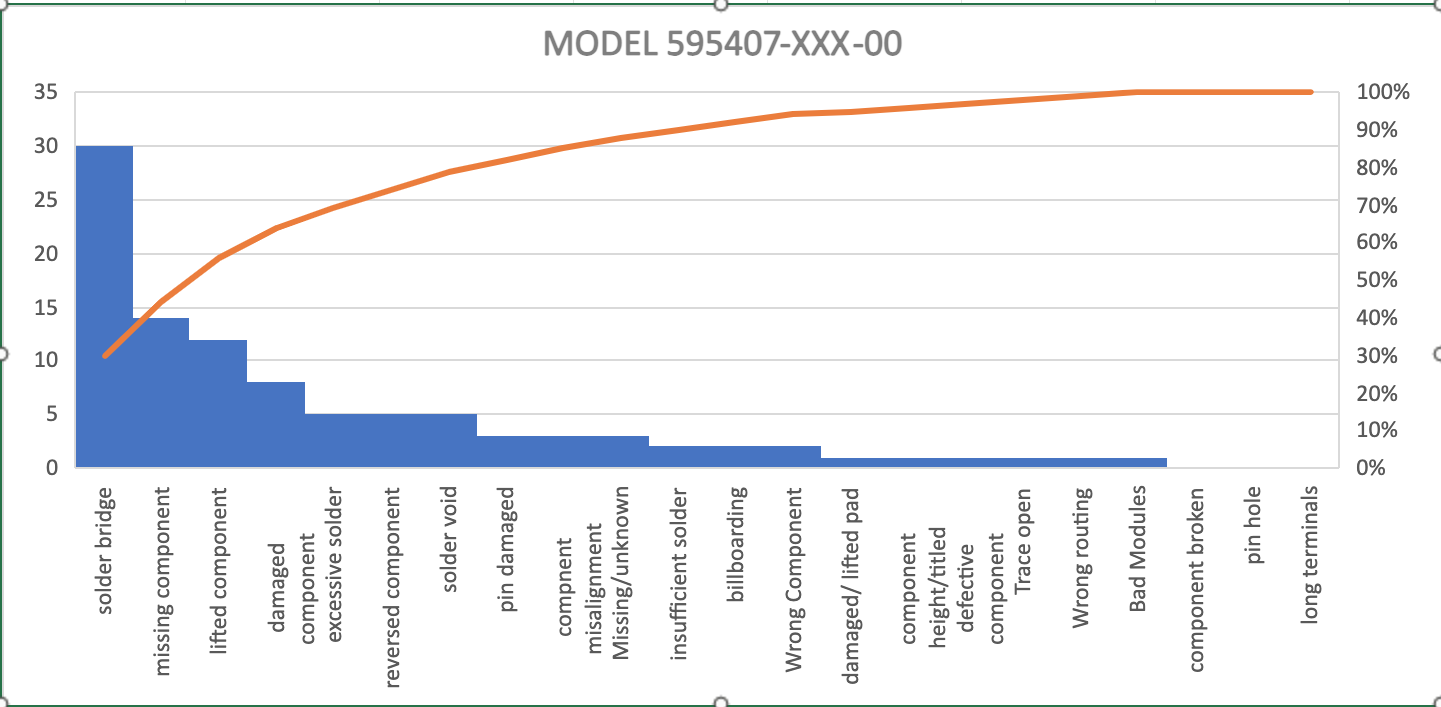
.png)
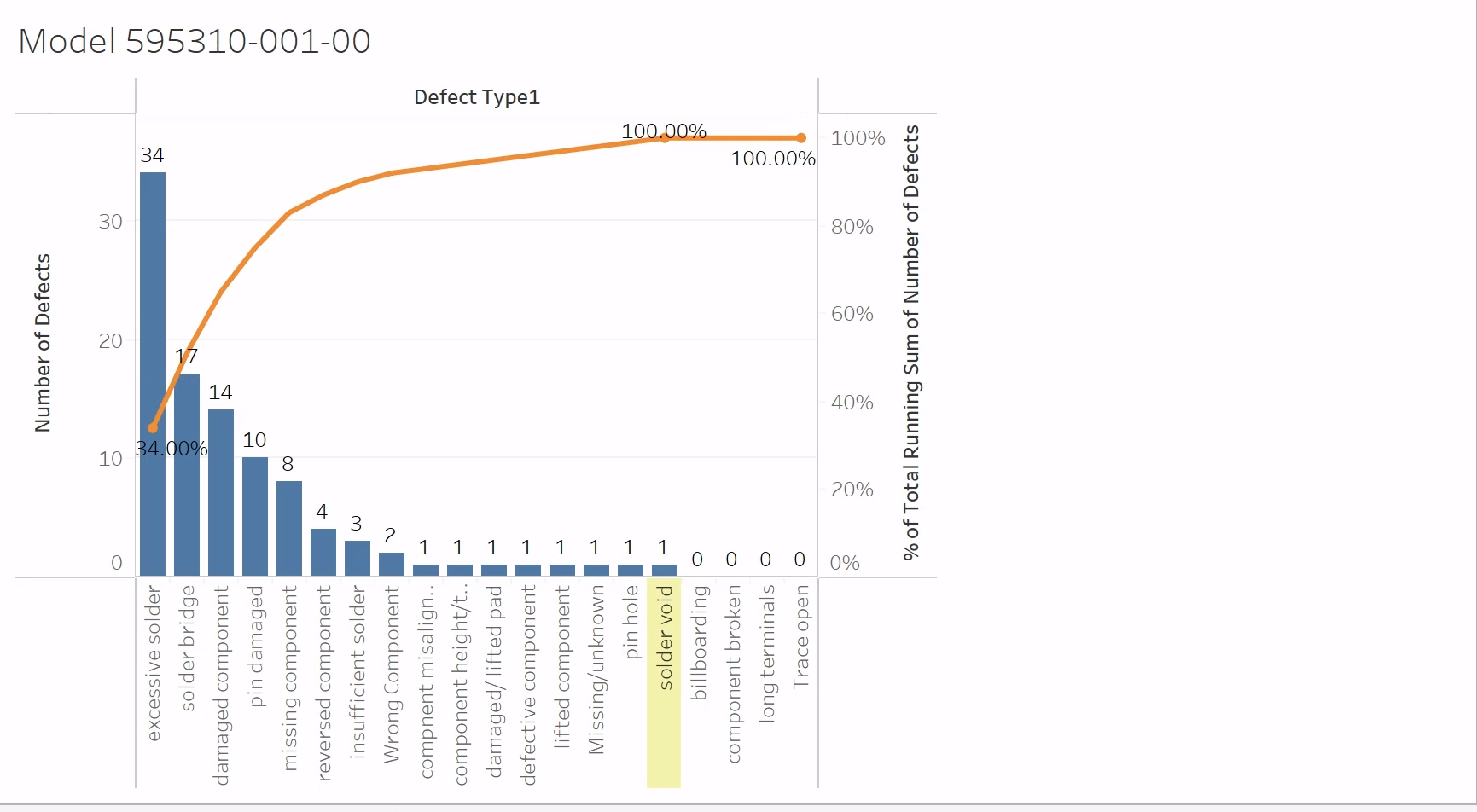
🔎 Key Insight:
Solder Bridge defects appeared across nearly all models, indicating a systemic process issue rather than a product-specific problem.
🧠 Root Cause Analysis
A Fishbone (Ishikawa) framework was used to categorize likely root causes.
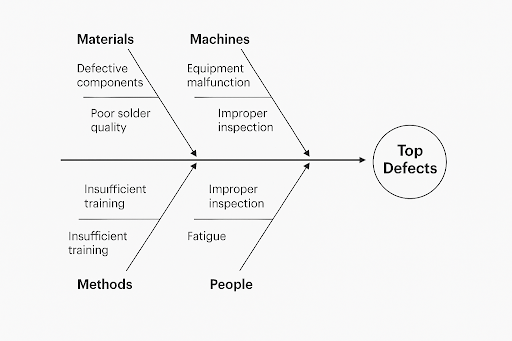
⚙️ Methods
- Inconsistent soldering procedures
- Lack of standardized work instructions
👷 People
- Insufficient operator training
- Worker fatigue
- Communication gaps between shifts
🏭 Machines
- Equipment calibration issues
- Inconsistent soldering temperatures
- Inspection gaps
🧪 Materials
- Poor solder quality or storage
- Defective or incorrect components
- Weak incoming material inspection
💡 Key Findings
- Solder Bridge defects were the most critical and widespread issue
- Defect patterns were consistent across models, pointing to process variability
- Manual operations showed signs of training, inspection, and standardization gaps
🚀 Recommendations
✅ Process Improvements
- Standardize soldering procedures (SOPs)
- Implement recurring operator certification and training
- Add visual job aids at workstations
🔧 Equipment & Inspection
- Establish preventive maintenance schedules
- Improve in-process inspections
- Consider Automated Optical Inspection (AOI)
📦 Material Controls
- Strengthen incoming component inspections
- Improve solder material handling and storage
👥 Workforce Optimization
- Rotate operators to reduce fatigue
- Improve shift communication with structured handoff logs
📈 Expected Business Impact
If implemented, these improvements would:
✔ Target the highest-frequency defects
✔ Support a 20% defect reduction goal
✔ Enable increased production without quality loss
✔ Improve compliance with IPC-A-610E standards
✔ Reduce rework costs and improve operational efficiency
🏁 Conclusion
This project demonstrates how structured data analysis combined with quality engineering principles can drive measurable improvements in manufacturing performance.
It highlights the ability to:
- Translate data into operational insights
- Identify systemic process issues
- Recommend actionable, business-focused solutions